

Gut Health
Book Your Gut Health Consultation TodayThe Gut-Brain Connection
A healthy gut is essential for overall health and wellbeing. The gut is often referred to as the 'second brain' due to its essential role in regulating not only digestive function but also mood, immune function and overall health. Poor gut health can lead to various symptoms and even long-term health problems, both physically and mentally.
Signs of Poor Gut Health
- Digestive issues (bloating, constipation, diarrhoea)
- Stomach discomfort
- Food intolerances or sensitivities
- Low energy or chronic fatigue
- Frequent illness
- Chronic inflammation
- Sleep issues
- Unexplained weight gain or difficulty losing weight
- Mental health challenges (anxiety, depression, brain fog)
Common conditions
- Irritable Bowel Syndrome (IBS)
- Irritable Bowel Disease (IBD)
- Crohn's Disease
- Colitis

Gut-Brain Axis
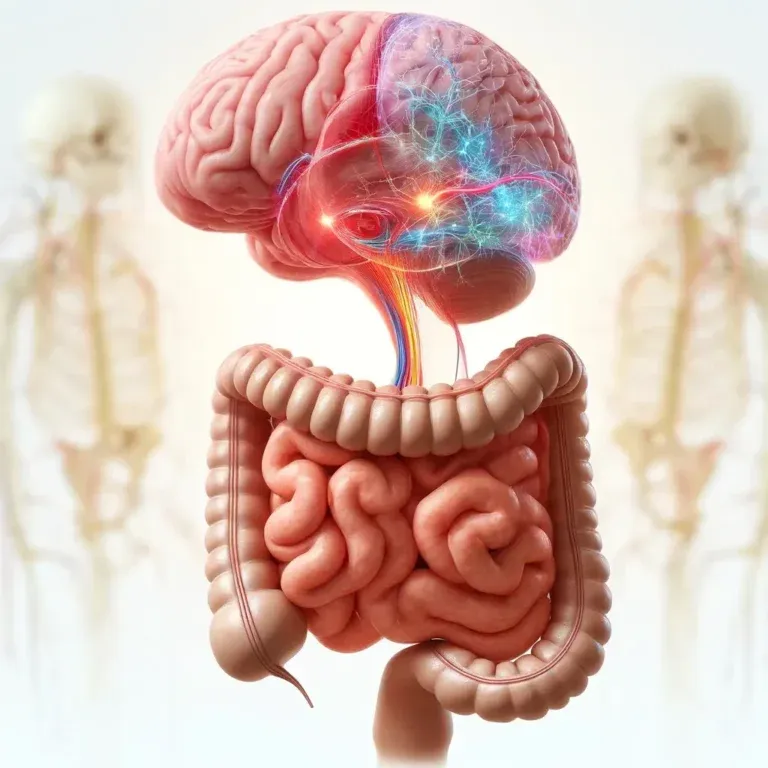
The gut-brain axis refers to the bidirectional communication between the gut and the brain. This communication process plays a vital role in maintaining overall health. Disruptions in this system can cause a variety of issues ranging from digestive disorders to mental health conditions like stress, anxiety, depression and more.
The Vagus Nerve: Bridging the Gut-Brain Connection for Better Health
The vagus nerve plays a vital role in this gut-brain axis, facilitating bidirectional communication between the gut and the brain. This nerve pathway influences physical and mental health by transmitting sensory and motor signals about digestion, immune function and emotional states.
Links Between Trauma and IBS: How Psychological Stress Affects Gut Health
Trauma is strongly associated with the development and persistence of IBS through its effects on the gut-brain axis, stress response, immune system and the composition of gut microbiota.
Studies show that individuals with IBS report higher rates of adverse childhood experiences (ACEs) and are significantly more exposed to psychological trauma than those without IBS.
Treating the psychological trauma alongside IBS can improve overall outcomes for those suffering.

“Gut-focused hypnotherapy is highly effective in functional gastrointestinal disorders when conventional treatments have failed.”
Irritable Bowel Syndrome (IBS)
What is Irritable Bowel Syndrome (IBS)?
Irritable Bowel Syndrome (IBS) is a common gastrointestinal (GI) disorder that affects many. According to clinical studies, 1 in 5 Australians suffer from symptoms of IBS, making it the most commonly diagnosed GI condition. Symptoms of IBS include abdominal pain or cramps, bloating, diarrhoea, gas and nausea, as well as changes in bowel habits such as constipation, diarrhoea or alternating between both. Other symptoms may include back pain, bladder issues, headaches and loss of appetite.
Gut Microbiome and IBS
A number of factors are thought to contribute to IBS, including gut-brain interaction, abnormal gut flora, stress, anxiety, learned behaviours and trauma.
Scientific Treatment Protocol for Irritable Bowel Syndrome (IBS)
Dr. Olafur Palsson, a professor of medicine and clinical psychologist based in the USA, has a strong interest in disorders of gut-brain interaction (DGBI). Dr. Palsson has developed a hypnosis treatment protocol specifically for treating medically non-responsive GI disorders, including IBS, with practitioners trained and experienced in clinical hypnosis.
The Treatment
The IBS treatment protocol involves sessions delivered over a structured schedule. Clients are encouraged to practise daily self-hypnosis between sessions to reinforce and build on the work done in clinic.
Supplementary Strategies
EFT (Emotional Freedom Techniques) can help reduce the severity of IBS symptoms by addressing the emotional elements associated with gastrointestinal distress. Studies have shown EFT to be a promising approach for individuals whose symptoms are closely linked to emotional distress, stress and trauma.



Some Happy Clients
Frequently Asked Questions
Can hypnotherapy work for all types of IBS?
Yes, hypnotherapy has been shown to be effective for all types of IBS — diarrhoea-predominant, constipation-predominant and mixed IBS.
Is there scientific support for the use of hypnotherapy for IBS?
Yes, there is a strong and growing body of scientific evidence supporting the effectiveness of hypnotherapy for IBS. Dr. Palsson and other researchers have published high-quality results demonstrating hypnotherapy as an effective treatment for IBS.
Can hypnotherapy be used for gastrointestinal (GI) conditions other than IBS?
Yes, hypnotherapy can be highly effective at managing GI conditions such as inflammatory bowel disease (IBD) and functional gastrointestinal disorders (FGID). Hypnotherapy can help manage the stress and emotional triggers that worsen these conditions, and can also support management of associated side effects.